Ancient cylinder seals and more
Sasanian Seals
The Sasanian or Sassanid Empire, and also referred to by historians as the Neo-Persian Empire, was the last Iranian empire before the Muslim conquests of the 7th-8th centuries AD. Named after the House of Sasan, it endured for over four centuries, from 224 to 651 AD, making it the longest-lived Persian imperial dynasty. The Sasanian Empire succeeded the Parthian Empire and re-established the Persians as a major power in late antiquity.
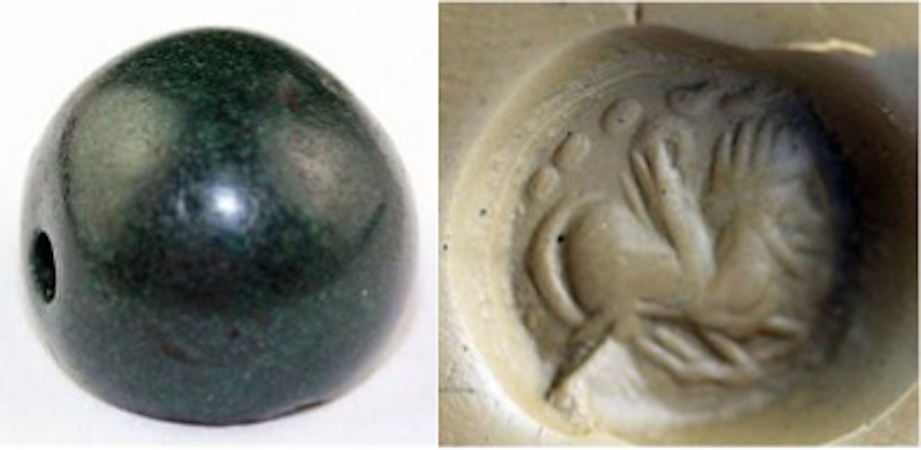
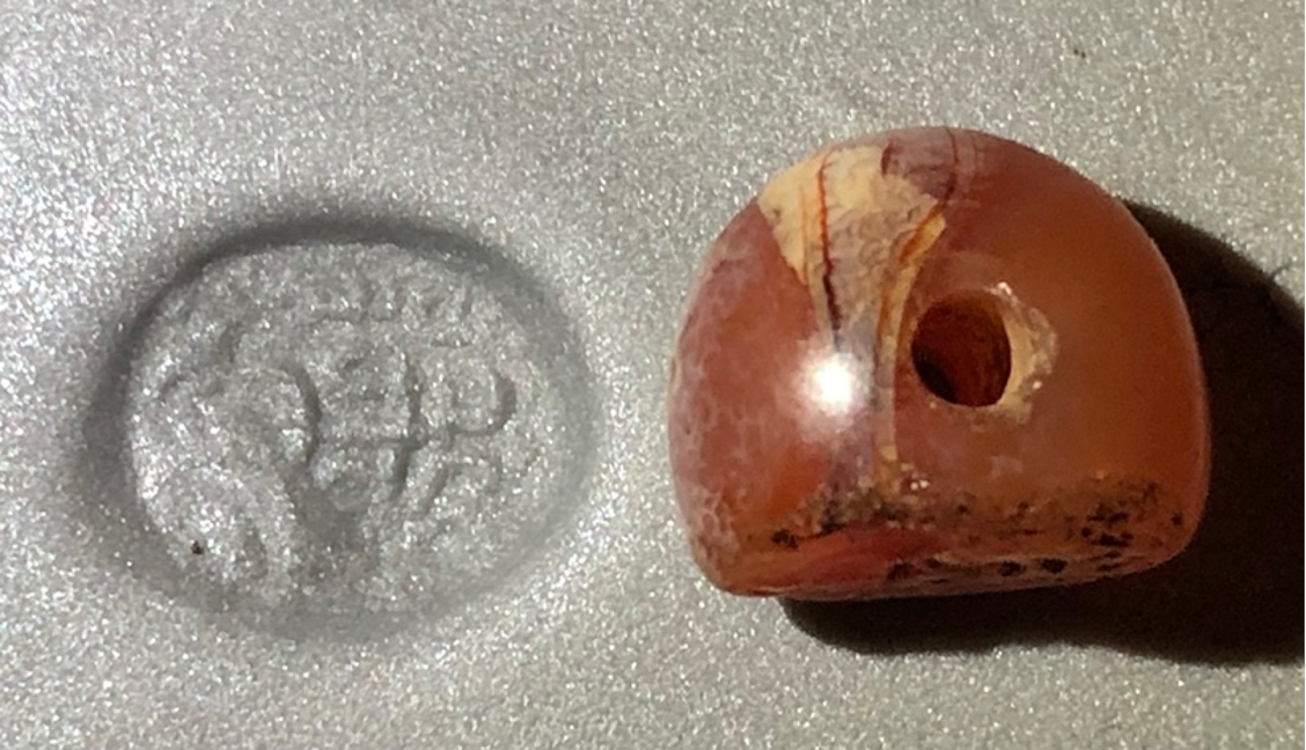
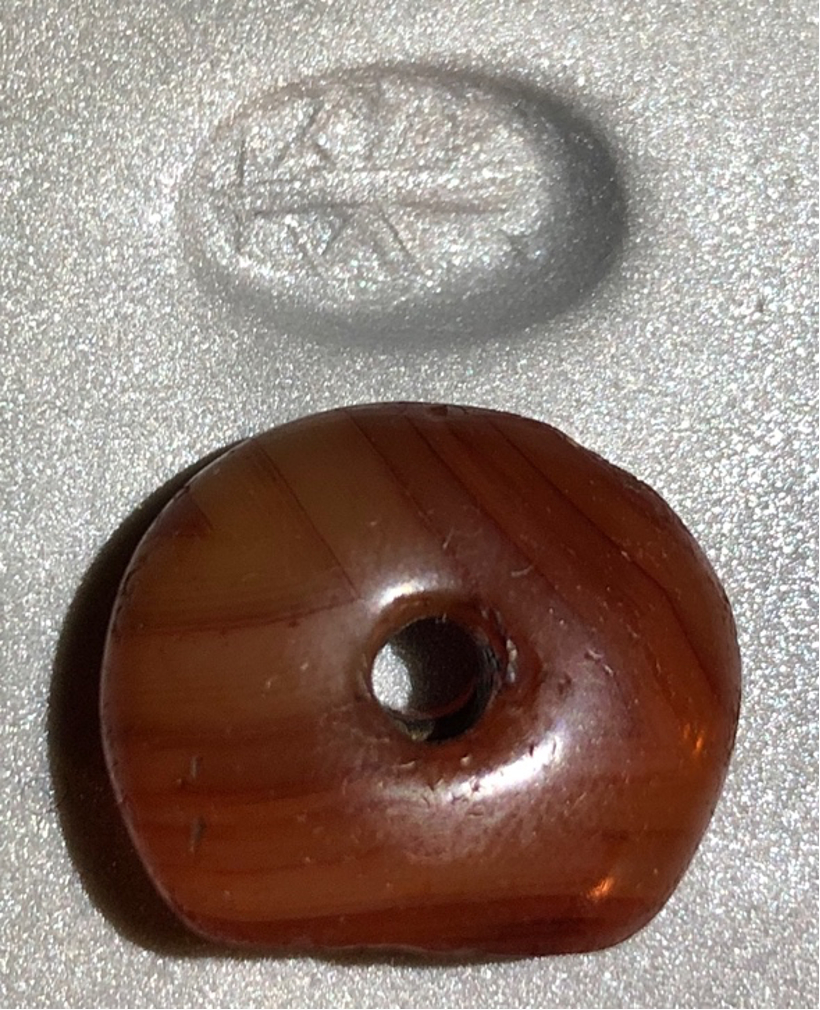
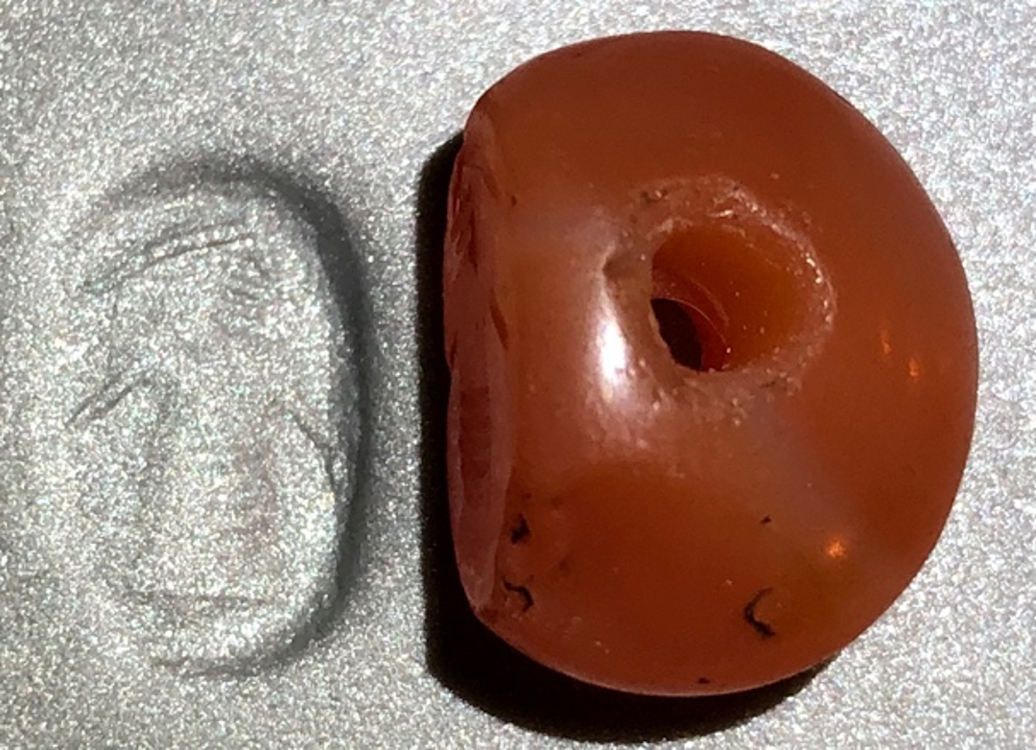
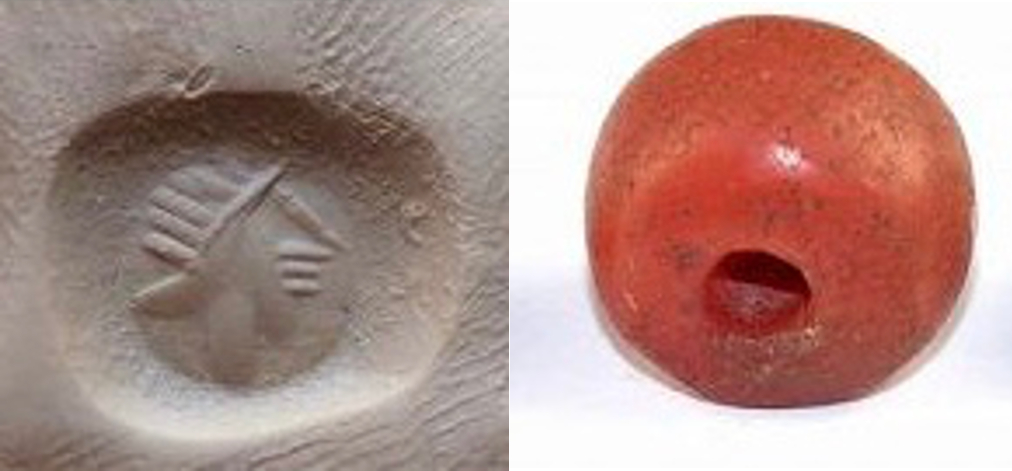
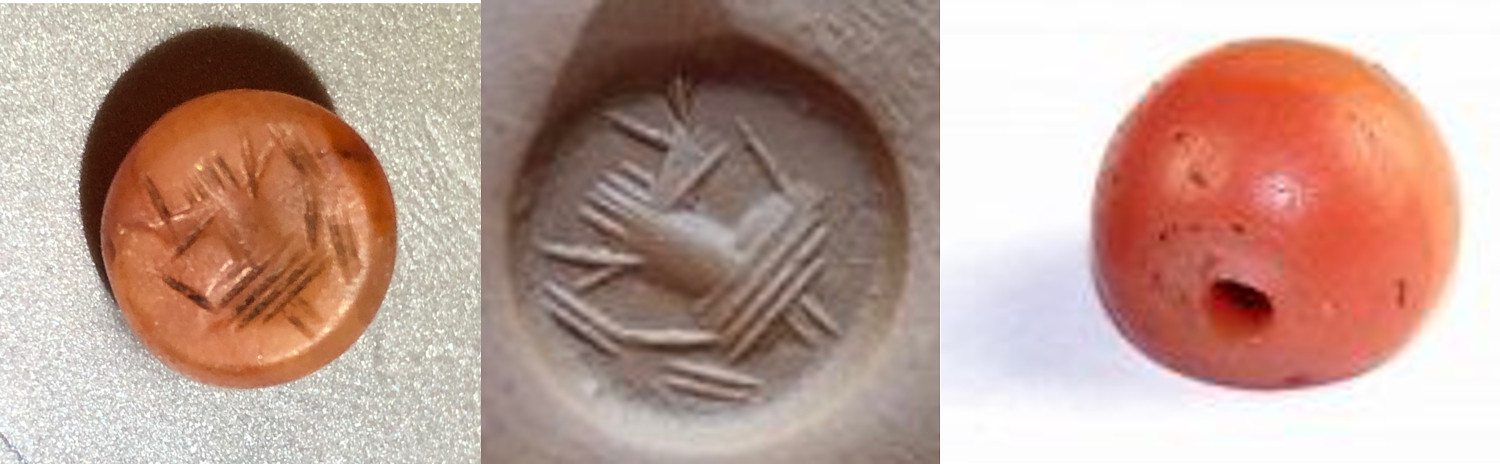
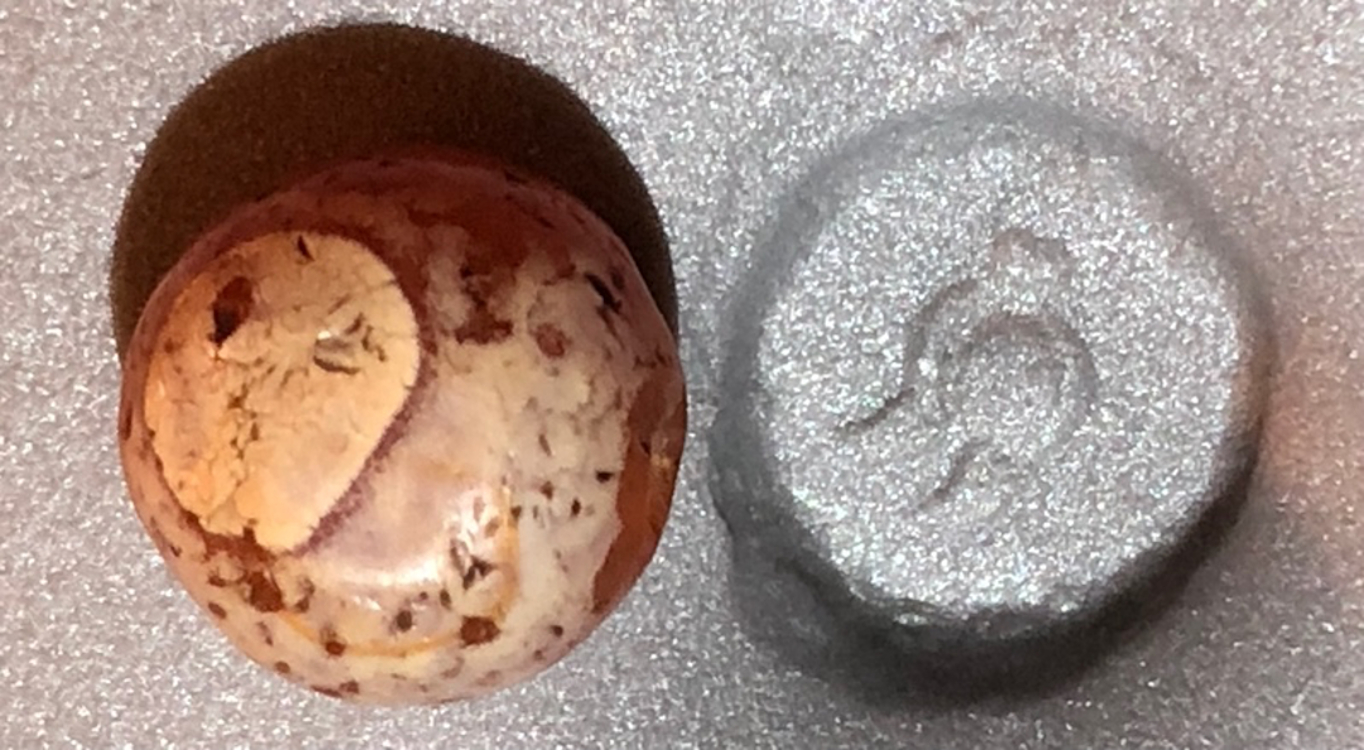
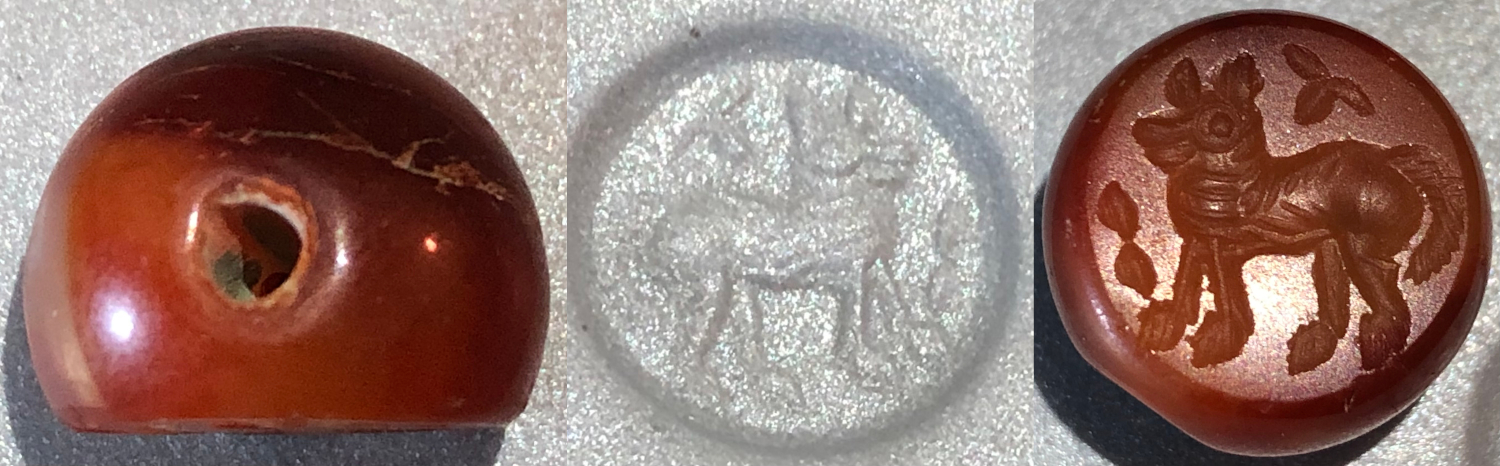
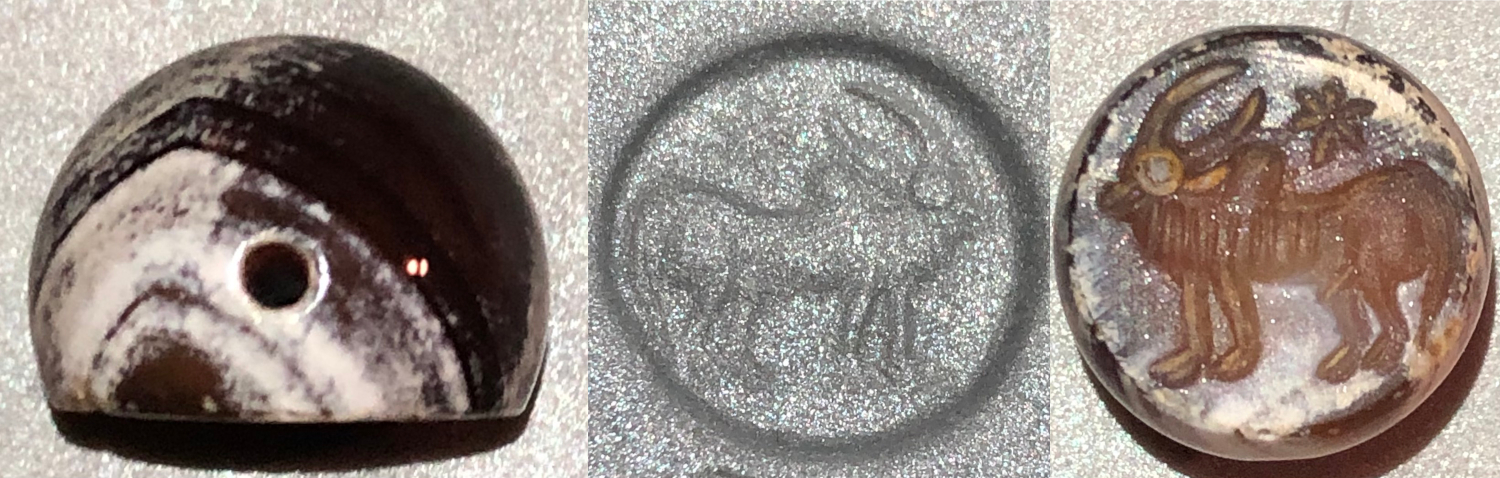
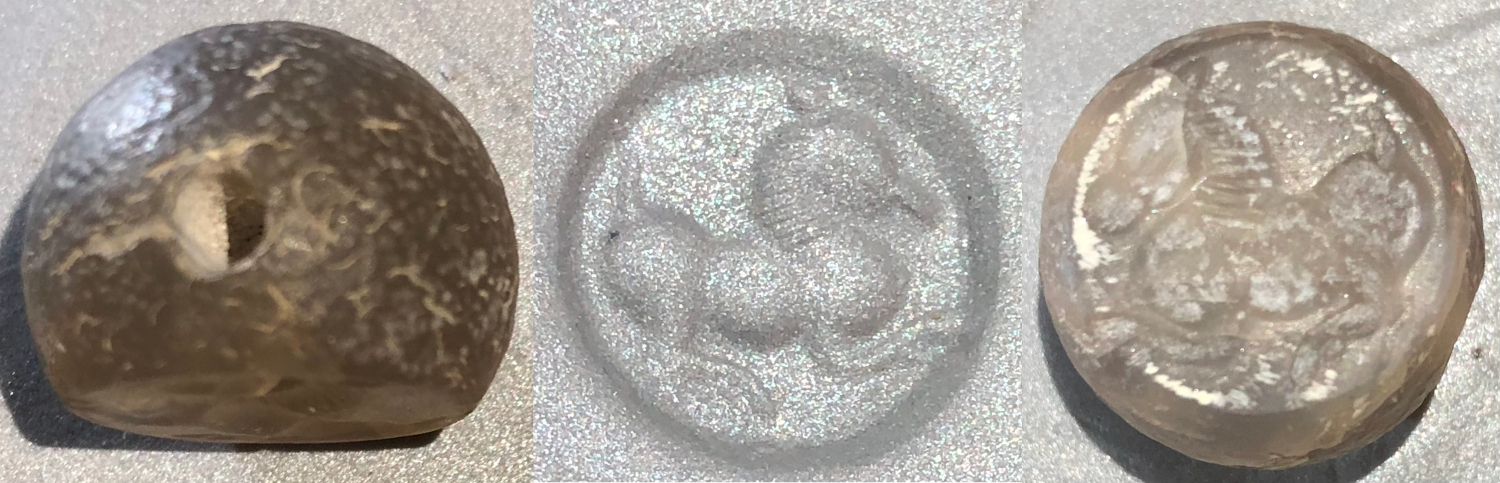
During this period a very distinctive style of stamp seal was developed and became dominant in the region. It was a rounded dome shape with a flat surface at the bottom, engraved with small relatively simple motifs. Most had a drill hole from side to side for suspension purposes.
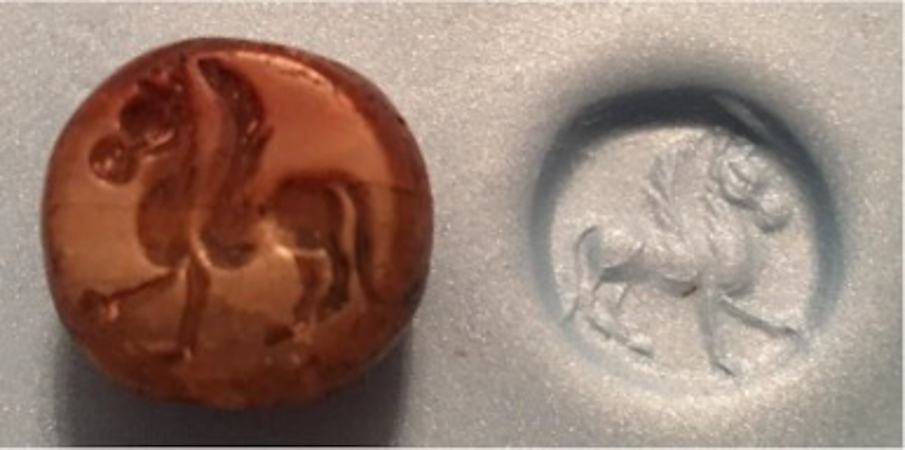
A variety of stones were used for these seals including carnelian, hemitite, rock crystal and agate. The collection contains a small but representative group of these small but very distinctive seals.
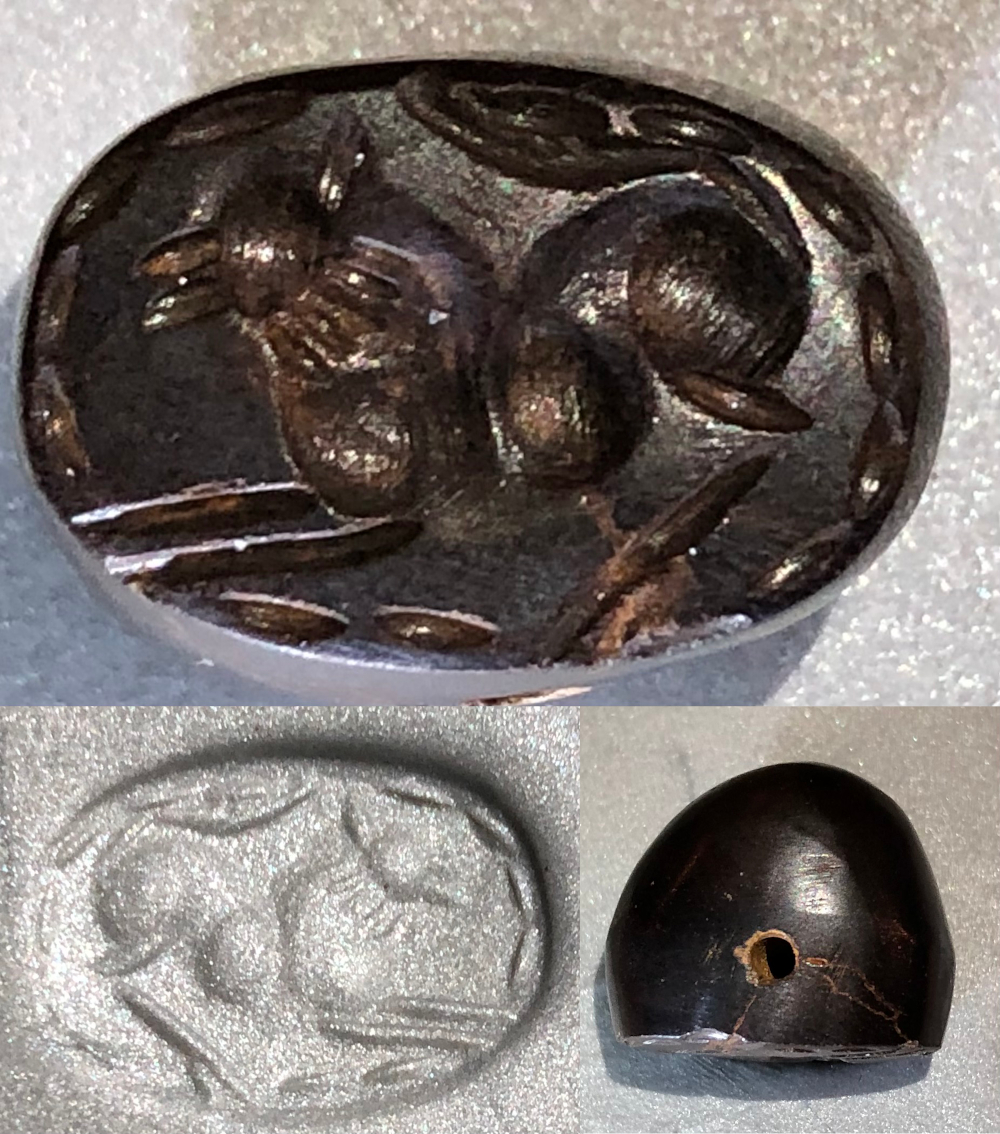
Black polished hematite Sassanian stamp seal carved with the figure of a pouncing lion. Carved in the domed shape popular in this era, this seal dates from 224-651 AD and has a drill hole through the side for suspension. It measures 18 mm x 12 mm on the face and 16 mm in height.