Ancient cylinder seals and more
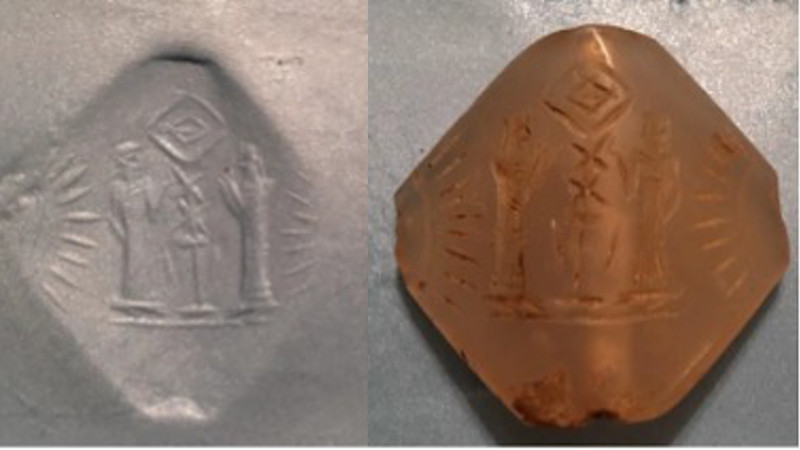
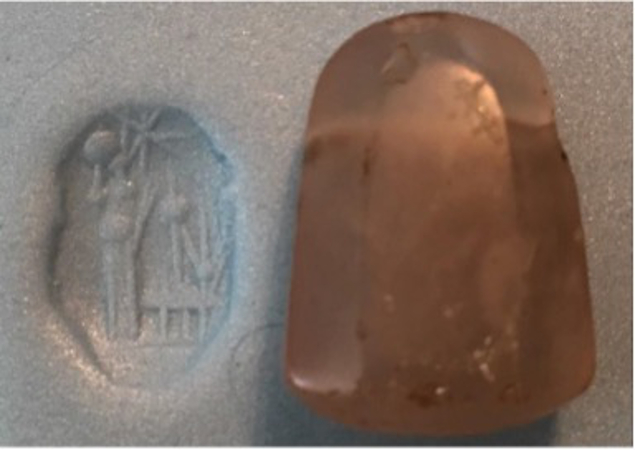
Neo-Babylonian pendant-like white rock crystal stamp seal with long-gowned worshipers, perhaps a husband and wife, facing an altar with bursts of rays on both sides and a large geometric eye- like symbol above. The symbols indicate that the deity being worshiped is likely Ishtar. This seal measures 35 x 34 mm and has a lengthwise piercing down its axis. It dates from the period between 626 BC and 539 BC.
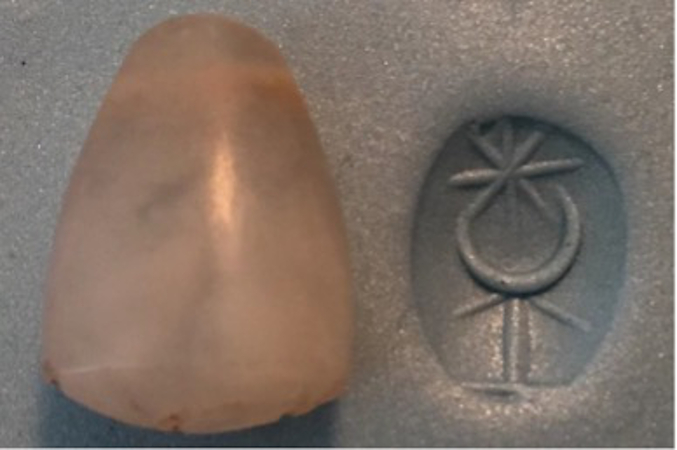
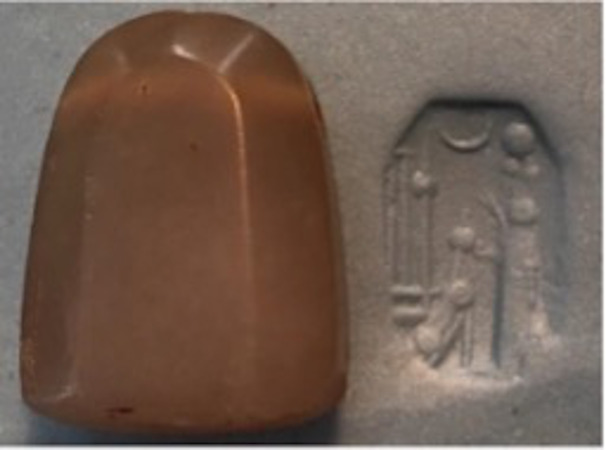
Polished quartz stamp seal from the Neo-Babylonian period, 600-550 BC, with an elaborate carving of a priest in supplication facing right, before an altar with the spear of Marduk and the stylus of Nabu, son of Marduk and patron god of scribes and writing. In the Bible, Nabu is mentioned as Nebo in Isaiah 46:1 and Jeremiah 48:1. This seal measures 24 mm in height and has a drill hole from left to right at the top to allow for suspension on a cord.
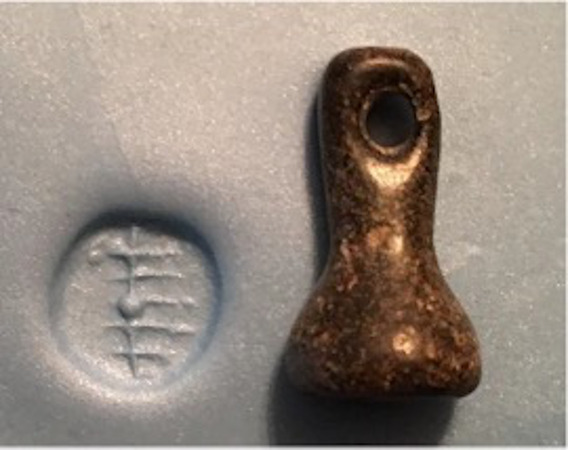
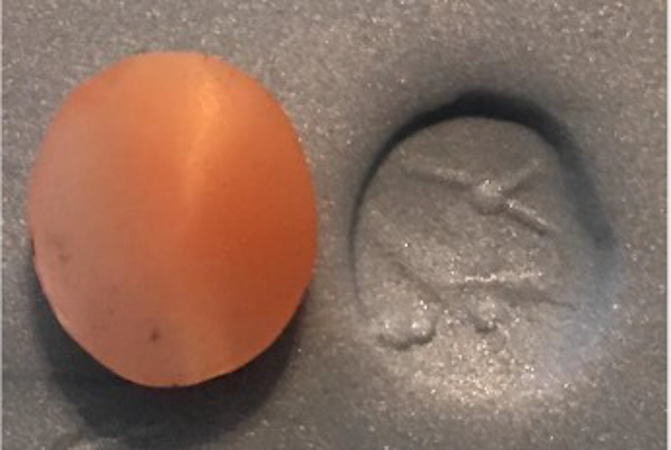
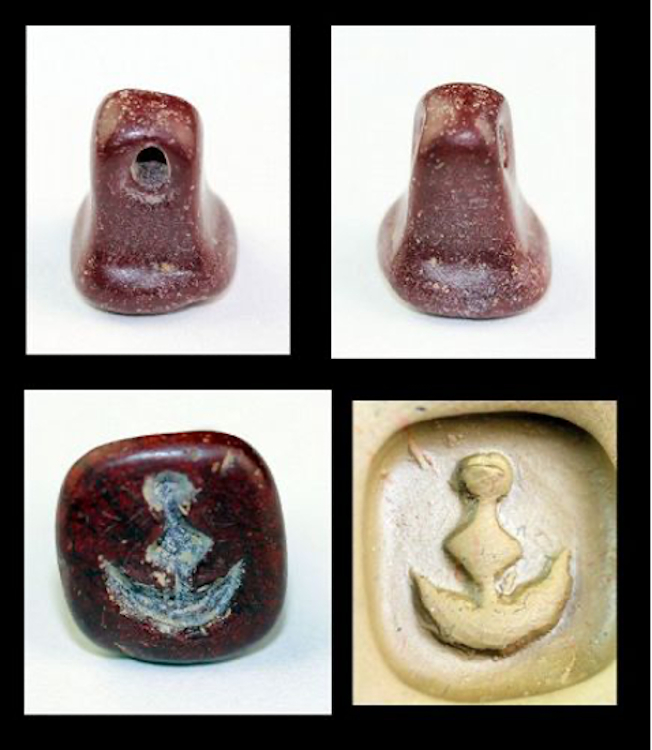
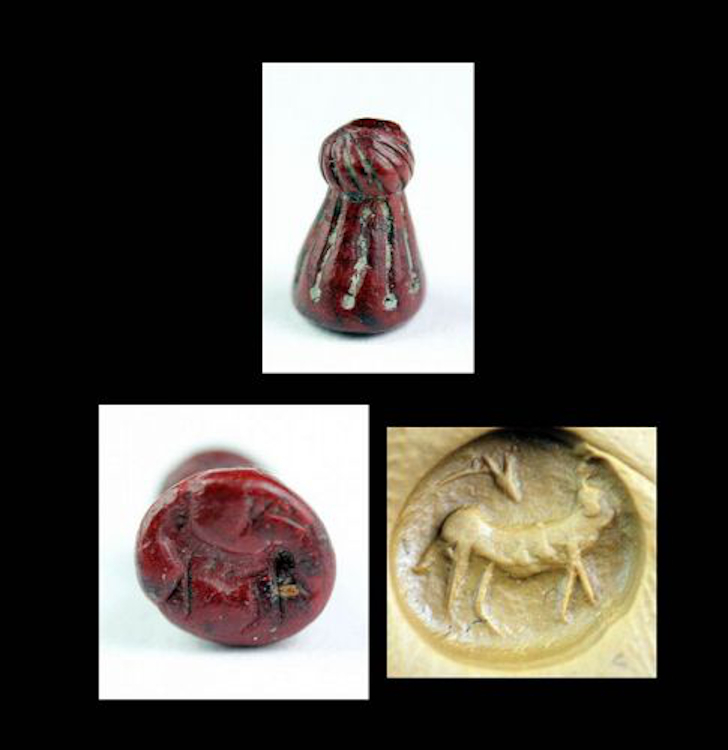
A stamp seal in red jasper with unknown symbol, perhaps a Luwian hieroglyph or just an anchor. This seal dates from the 1st. millennium BC. and is either Neo-Hittite of slightly later or from the Levantine cultures. It measures 22 mm. in height and is pierced at the top of the stem or handle for suspension on a cord or pin.
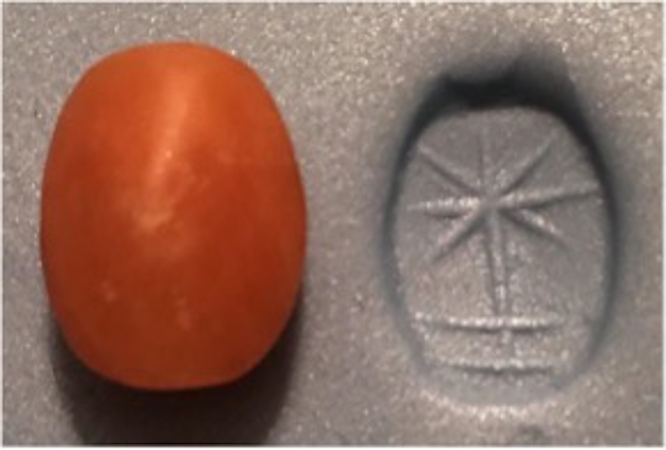
White stone Archaic Period (4500-3500 BC) domed “nipple” seal with a deeply incised geometric pattern. This seal is from Provincial Mesopotamia, possibly the Levantine. It had the traditional bi-directional drill hole down the center for suspension on a cord or pin and measures 35 mm at the widest point across and 8 mm in height.
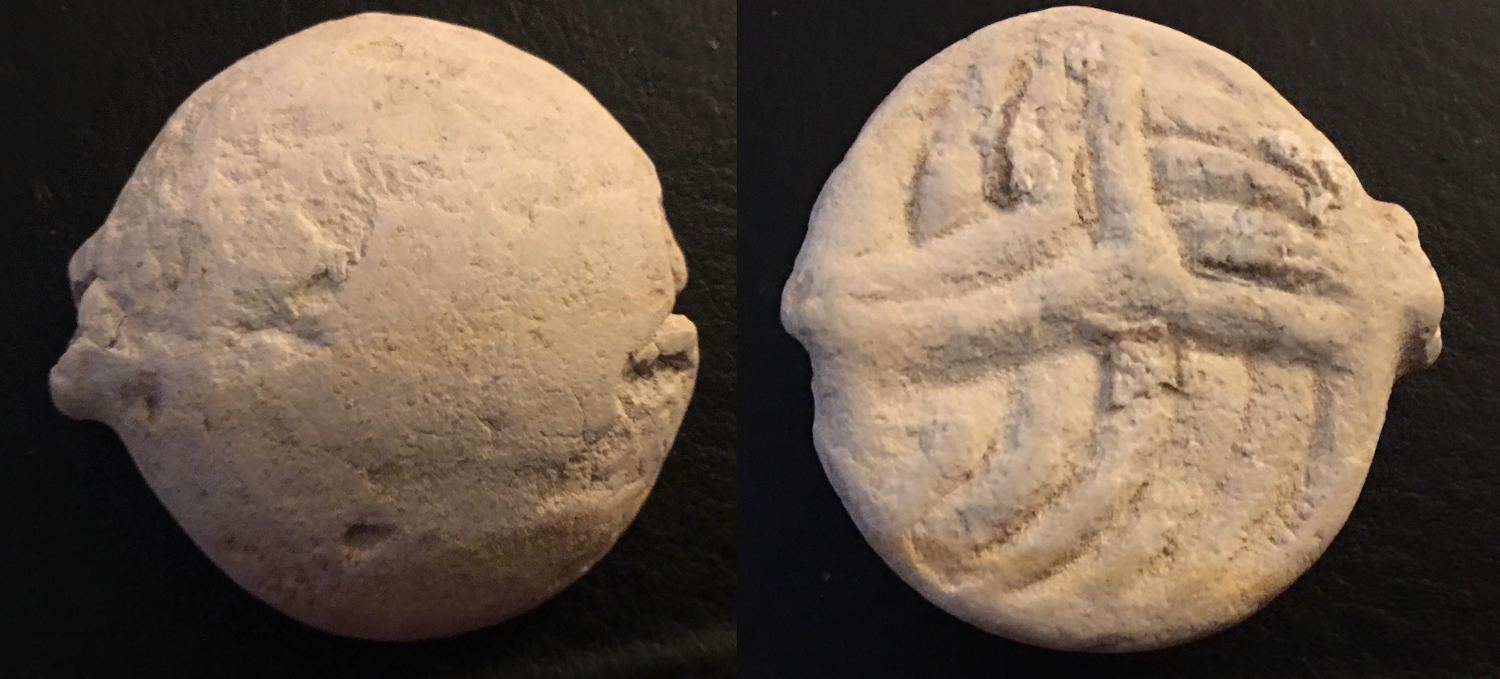
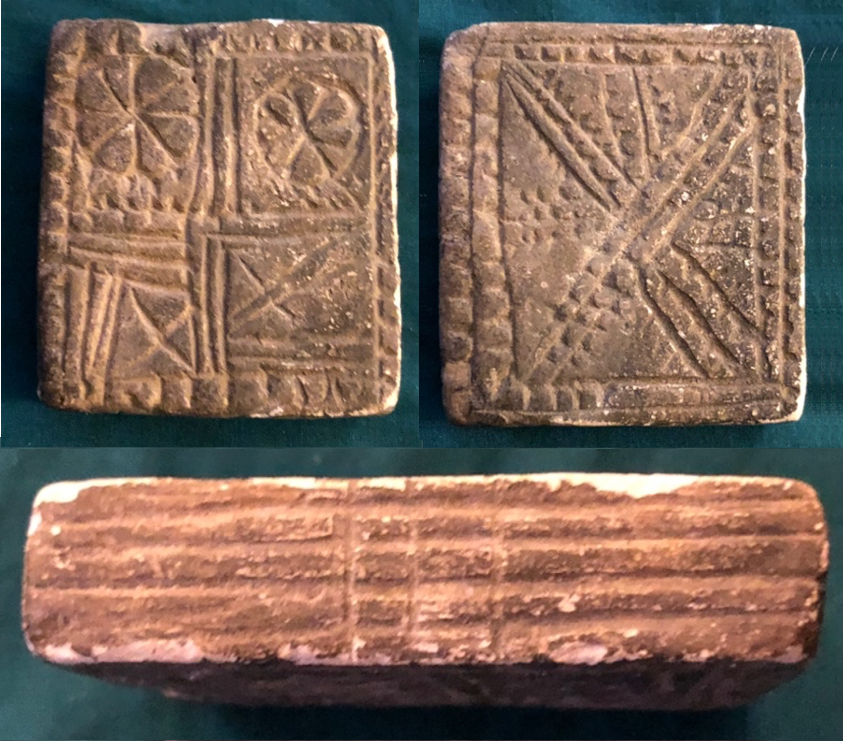
Grey stone bread seal with complex geometric designs on both sides. While bread seals can be hard to identify, this piece is simple in its design, which suggests that it is a provincial make, perhaps Levantine or Western Semitic / Syrian and likely to date from the 2nd -1st Millennium BCE. What is helpful in identifying this piece is that it clearly doesn’t share traits with Hellenic make or style, but at the same time, does offer some sort of motifs that share commonality to seals from that period from the Western provincial part of the Ancient Near East. This seal measures 2 1/4 x 2 1/8 x 1/2 inches.
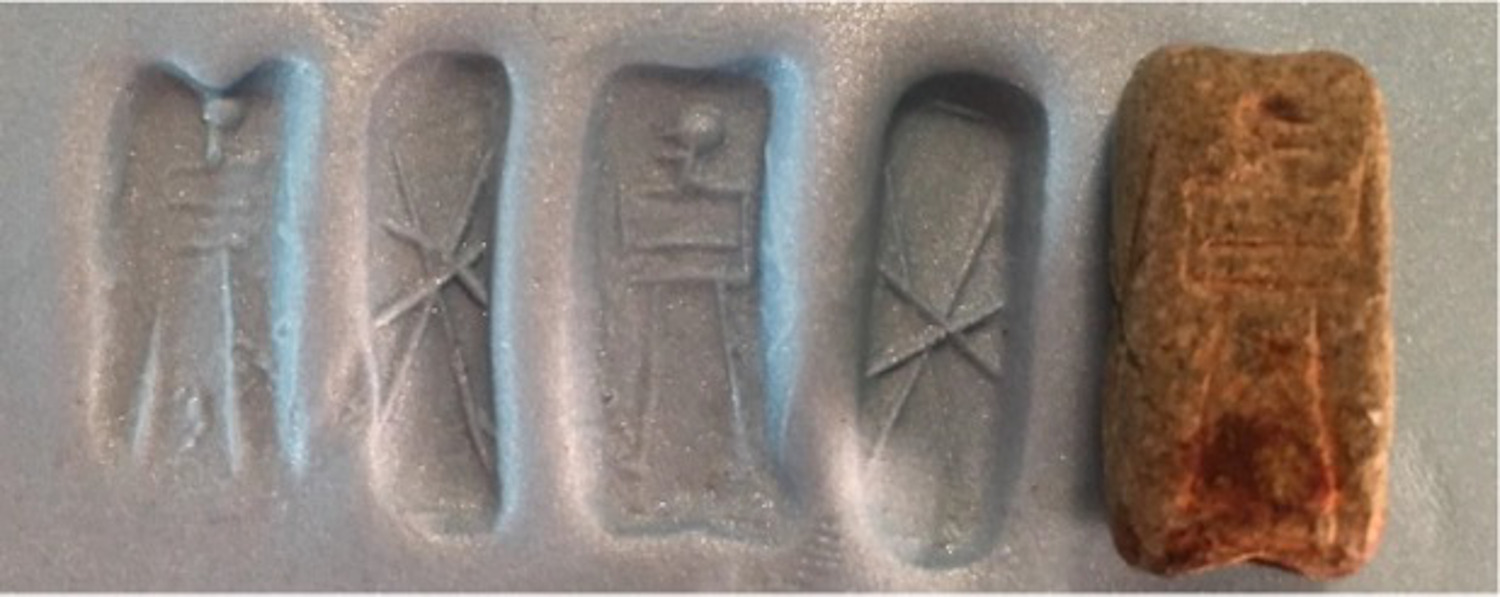
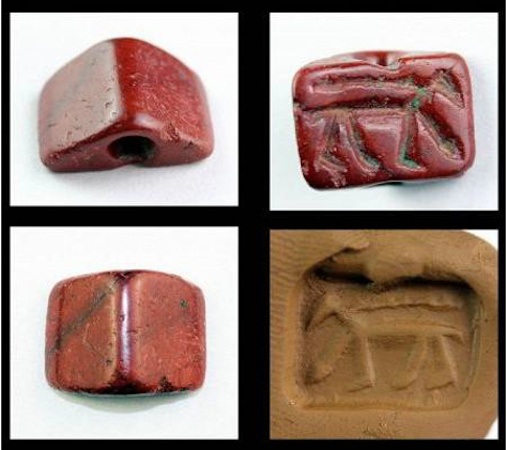
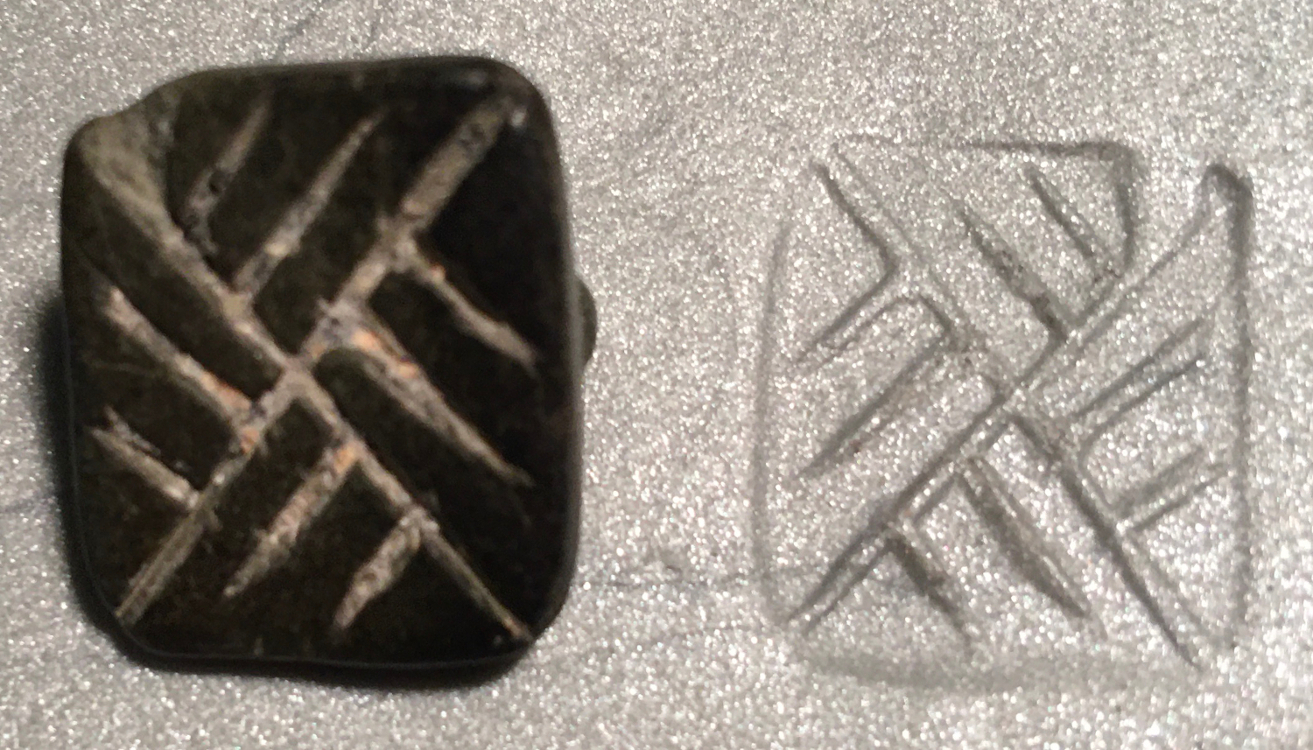
North Syrian or Mesopotamian gable seal from the late 4th. millenium BC. This seal features a gable shaped top, rectagular with a ridge of the gable running along the length of the seal above the peroration, interesting stylized engraving on the face. It measures 24 mm. X 24 mm.
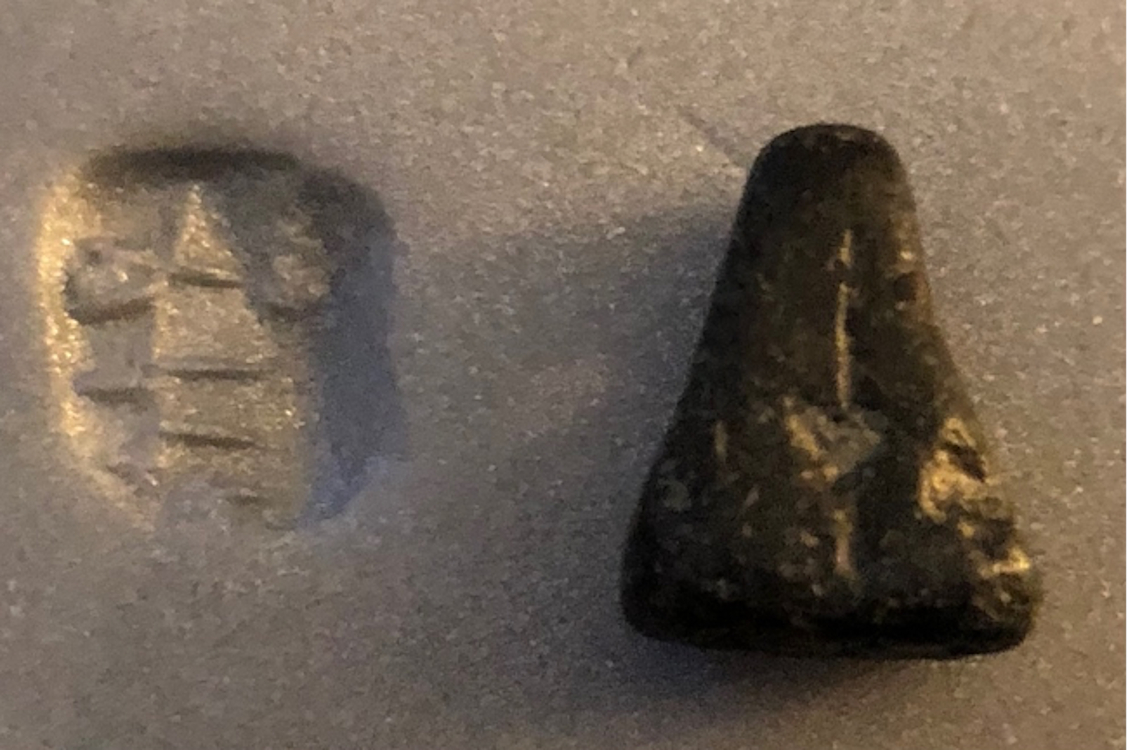
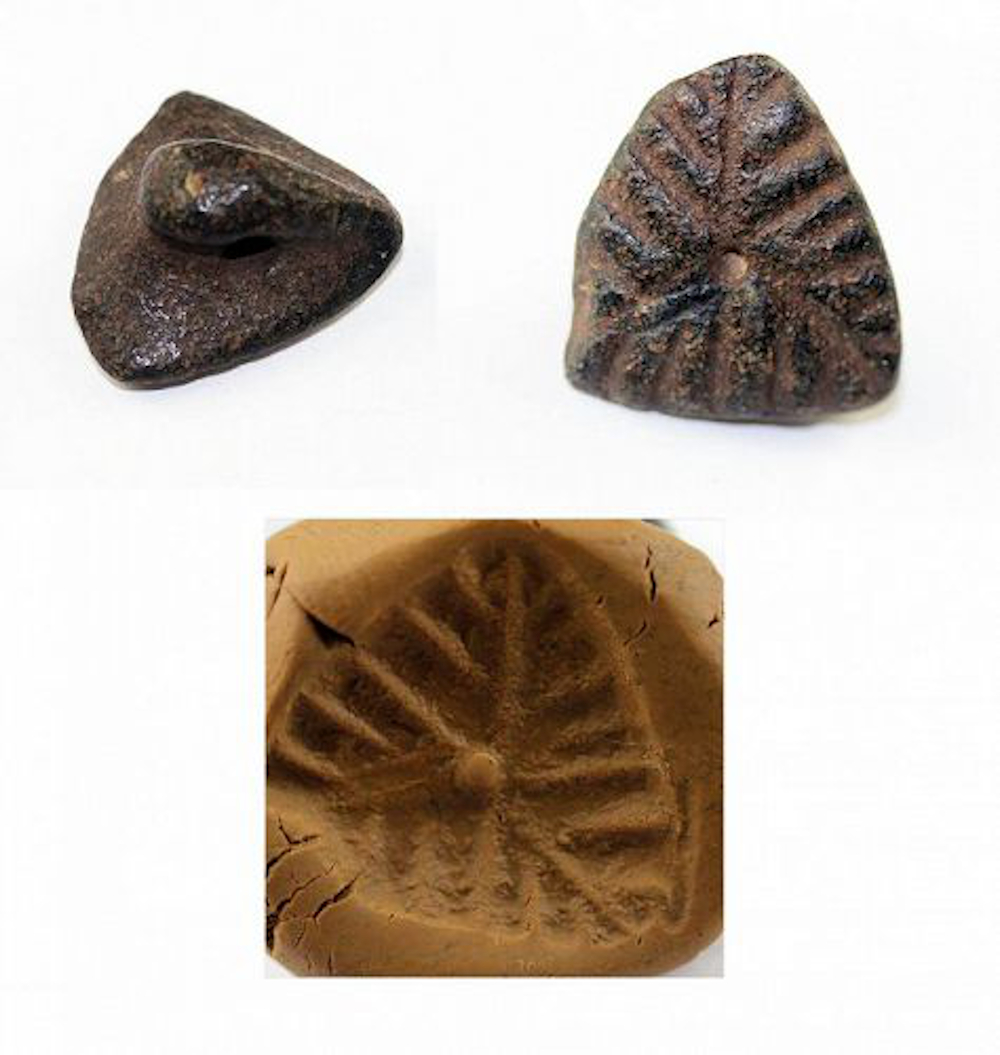
A stone stamp seal, carved in black serpentine with a high handle, Western Anatolia or Northern Syria from the 2nd. millenium BC.-early 1st. millenium BC. It features a triangular seal plate, engraved with a floral motif, finely made knob handle with piercing and measures 20 mm. height c. 9-10 mm. From the Dr. Beck, Bonn, Germany.
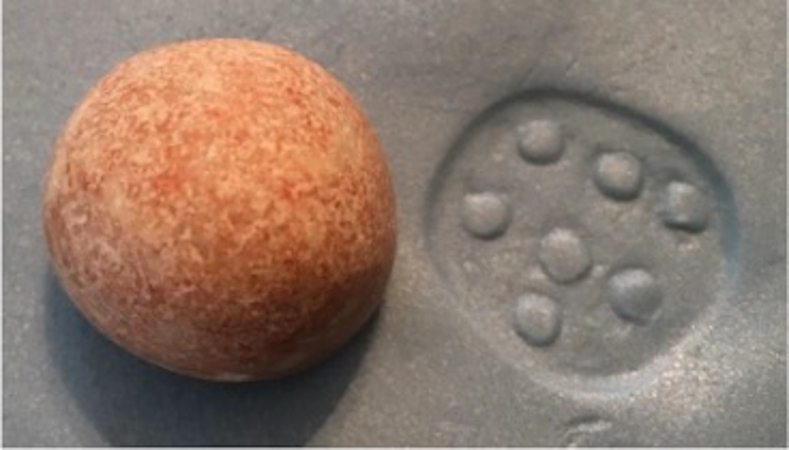
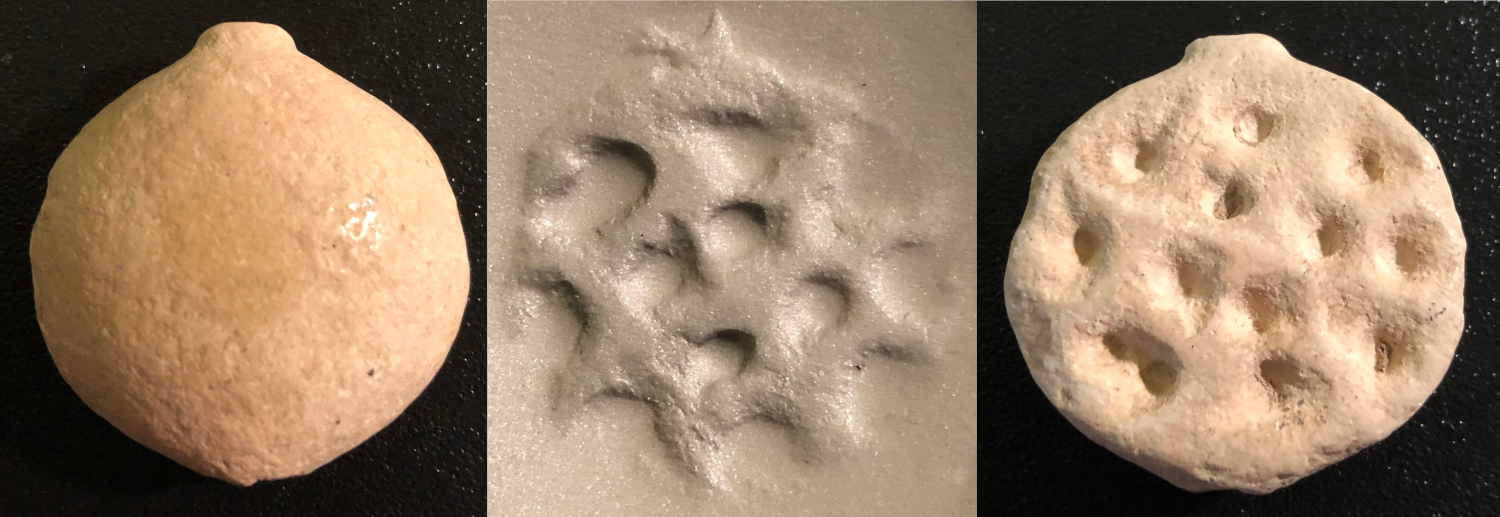
White stone Archaic Period (4000-3000 BC) domed “nipple” seal with a deeply incised pattern of equally spaced drill holes. This seal is from Provincial Mesopotamia, probably the Levant. It has the traditional bi-directional drill hole down the center for suspension on a cord and measures 35 mm at the widest point across and 8 mm in height. What is special about these seals are the carefully carved “nipples” at the edges where the drill holes enter and exit.
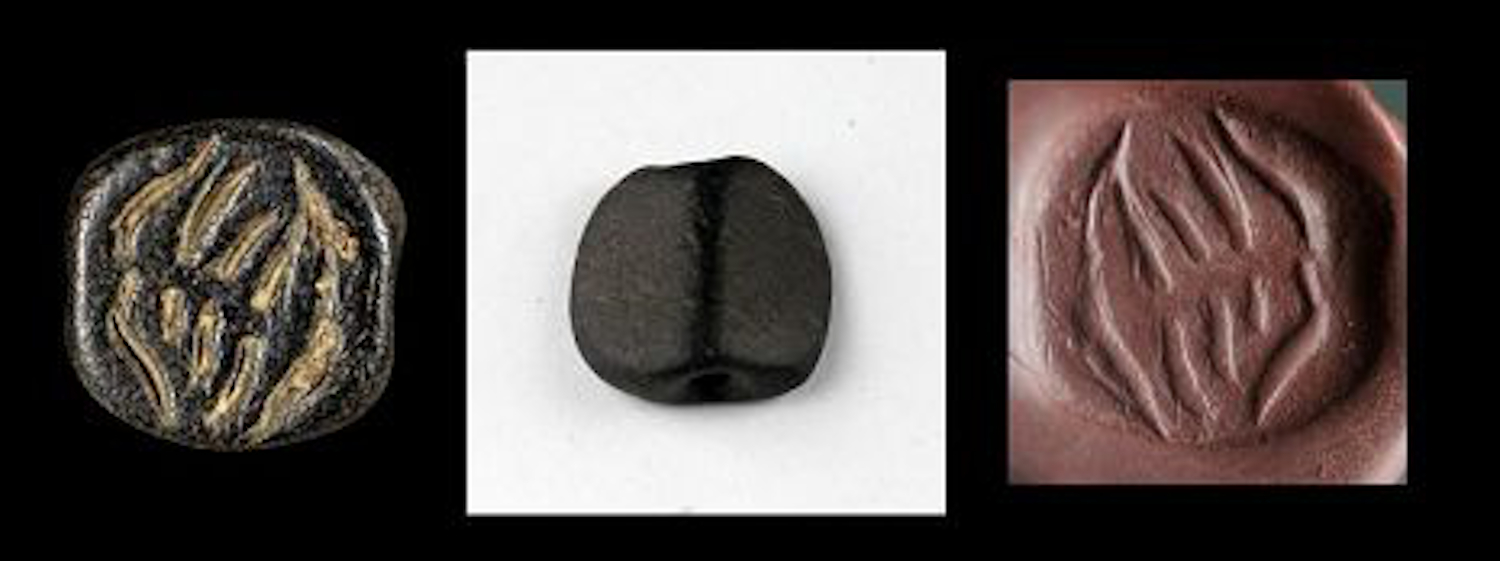
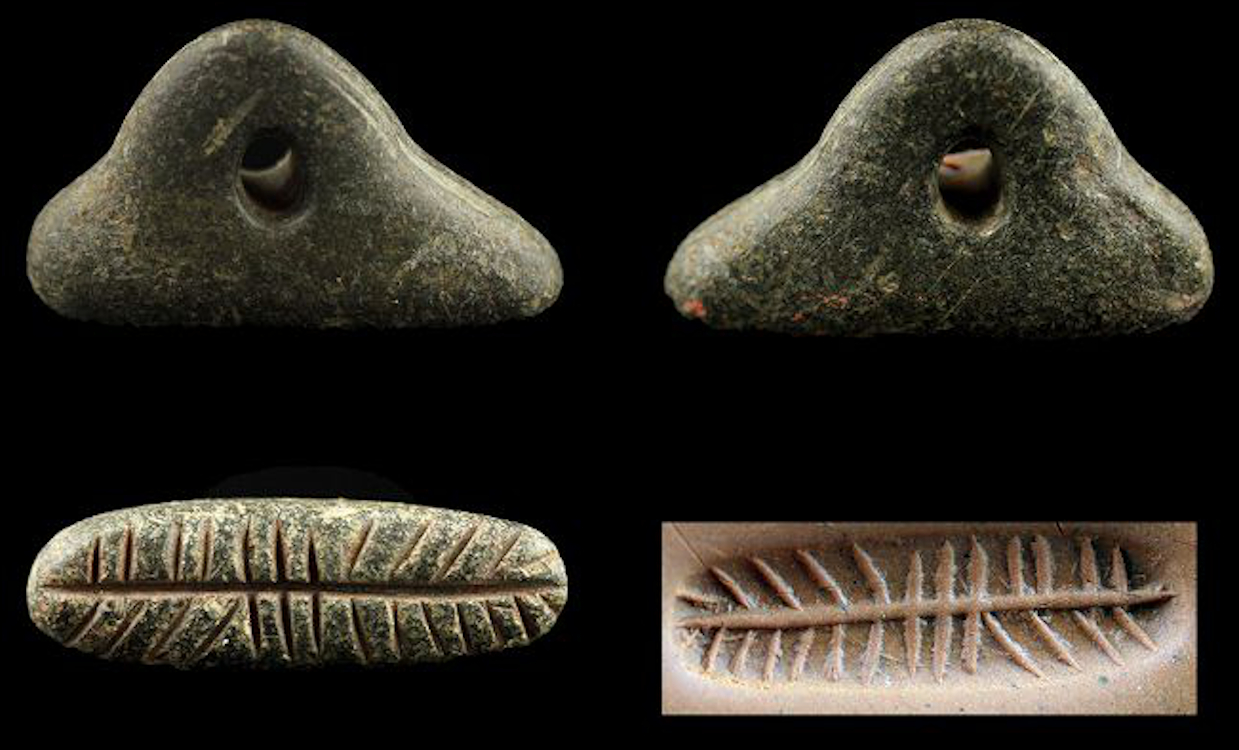
A Halaf period serpentine stone seal with an elongated Herring pattern design, Mesopotamia or Northern Syria, 6th.-5th. millennium BC. A very early seal with a particularly fine engraving on the face, carved in a smooth serpentine. There is a loop at the top to allow for suspension. This seal measures 31 mm. in length.
Provenance: Gustav Oberländer (1926-2012), Oberländer aquired his massive and important collection between 1985 – 2000s, bought at reputable dealers and from old collections. Gustav Oberländer specialized in early stamp seals from the pre-historic and Dynastic civilizations in the Near East / Mesopotamia, Anatolia and Bactrian.